Table Of Content

While asymmetrical balance merely shifts the perspective in an image, off-balanced designs create a feeling of unrest. Ironically, it is this quality that sometimes makes these images hard to ignore. But proceed with caution – if you hit the right mark your design can end up looking amateurish or disorderly.
Symmetrical balance in graphic design
It is commonly seen in logos or illustrations where the central element is surrounded by complementary or supporting visual elements. To create a radial balance, designers arrange elements in a circular or spiral pattern, with the central point as the focus. Elements can be varied in size, color, or shape, but they should maintain a sense of equilibrium and unity around the central point. With balance from eye direction the attention that higher visual weights get will be neutralized.
Recommended Articles
Another great way to create a balanced feeling design is by positioning the elements in the design just right. This is also one of the prime examples of asymmetrical balance, where many little elements on one side of the design can balance out one large element on the other. If a designer feels that none of these types of balance can help attain the intended effect, they can also experiment with off-balance designs. An off-balance effect, also known as discordant balance, is achieved when a design or image has visual appeal without balance.
Symmetrical balance
A balanced design doesn’t necessarily mean every element is given equal weight. Rather, it simply means that no one element overpowers the design — everything works together to create a unified whole. The larger the size of the elements, the heavier their visual weight will be. Increase and decrease the size of elements in the composition to achieve balance. Everything in his paintings seems chaotic, but this chaos creates a sense of harmony.
How to get balance in interior design for rooms with harmony - LivingEtc
How to get balance in interior design for rooms with harmony.
Posted: Thu, 05 Jan 2023 08:00:00 GMT [source]
Today, balance, along with other design principles, is taken very seriously in any visual art form. You can use contrast to make an element stand out, create depth, or even add balance to your design. Contrast is the difference between two things and it’s important because it creates visual interest.
Marie Boulanger's type design practice balances hypersensitivity and analytical thinking - It's Nice That
Marie Boulanger's type design practice balances hypersensitivity and analytical thinking.
Posted: Mon, 24 May 2021 07:00:00 GMT [source]
Simple Steps to Blend Two Images In Photoshop Like a Pro
The composition lacks distinct focal points, and the elements share a uniform emphasis. The lack of hierarchy leads to visual noise at first glance. The downside of symmetrical balance is that it’s static and sometimes regarded as boring. Because half of the composition mirrors the other half, at least half of the composition will be rather predictable.
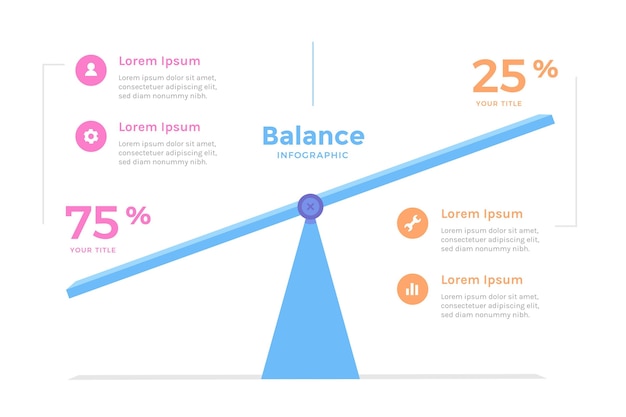
Having a foundation in design is your key to success in this industry. A great place to start is to learn graphic design principles. By learning the design principles, you can incorporate them into your design process and start taking away some of the guesswork. You can use different shapes to balance out the design, like the ones used in the image.
How to Add a GIF to Your Instagram Comments: Step-by-Step Guide
It’s achieved by giving equal weight to a large number of elements. Unlike symmetry, the result is not a perfectly even pattern. Instead, it’s a type of balanced chaos in which several different elements combine to make a whole.
In graphic design, balance is the visual equilibrium of two or more elements. The visual weight of an element is determined by its size and shape, as well as its color. Asymmetrical balance in packaging design makes products memorable. Using asymmetry in packaging design will make the overall design stand out, especially using contrasting colors that make an impact.
If one of the people was much bigger, though, the balance would be thrown off. As a father of twins, writer, and lover of all things healthy and aesthetically pleasing, I am constantly seeking ways to grow and improve. Apple’s Mac webpage gives us a stunning example of great reflectional symmetry. Think about how each step produces a reflection of the opposite foot, but because of movement, each footprint doesn’t line up with the other. Imagine a car’s moving wheels and spinning windmills, and you’ve got rotational symmetry. Now that you know the rules, you can learn how and when to break them.
Thankfully, you don’t have to be an expert to apply this principle to your next project. A balanced composition is simply more pleasing to the eye, and depending on what type of balance you choose, can create a feeling of order. Paired with a clear visual hierarchy, balance makes a design digestible at a glance. Asymmetrical balance is when elements aren’t weighted equally. This adds visual interest and is ideal for more modern or informal designs.
Good news, here are some tips to help you achieve asymmetrical balance in your designs. We’ll use some of our Visme templates that use asymmetrical balance as examples. All these templates are available for you to use at any time inside your Visme dashboard.
When that happens, more often than not, there is something wrong with the balance of the elements in that design. The home page of Vlog.it exhibits radial balance, which I hope is clear from the screenshot. Other than the shape in the top-right corner, everything revolves around the center of the page, as the three rings of images rotate around the center circle. Both are calls to action and both break the symmetry, calling extra attention to themselves. Notice how both arrows use colors that contrast with their background, further increasing the attraction of these elements. I think moving these two elements out of center to make them look like they’re visually centered would balance the composition a little better.
This is the opposite of symmetrical balance and is also known as informal balance. The Hubspot website effectively shows this through the use of illustration and text. Radial balance, also known as circular balance, is achieved when elements radiate from a central point. It creates a sense of harmony and unity, as all elements are visually connected to the center. Another way to achieve balance is to increase or decrease the size of the design elements. The larger the size of the design elements, the heavier the visual weight will be.




No comments:
Post a Comment